
Ringworm
Dermatophytosis, commonly known as Ringowrm, is actually not a worm at all! It is a fungal skin infection that is considered contagious to animal and humans. While extremely contagious, the infection is highly treatable.
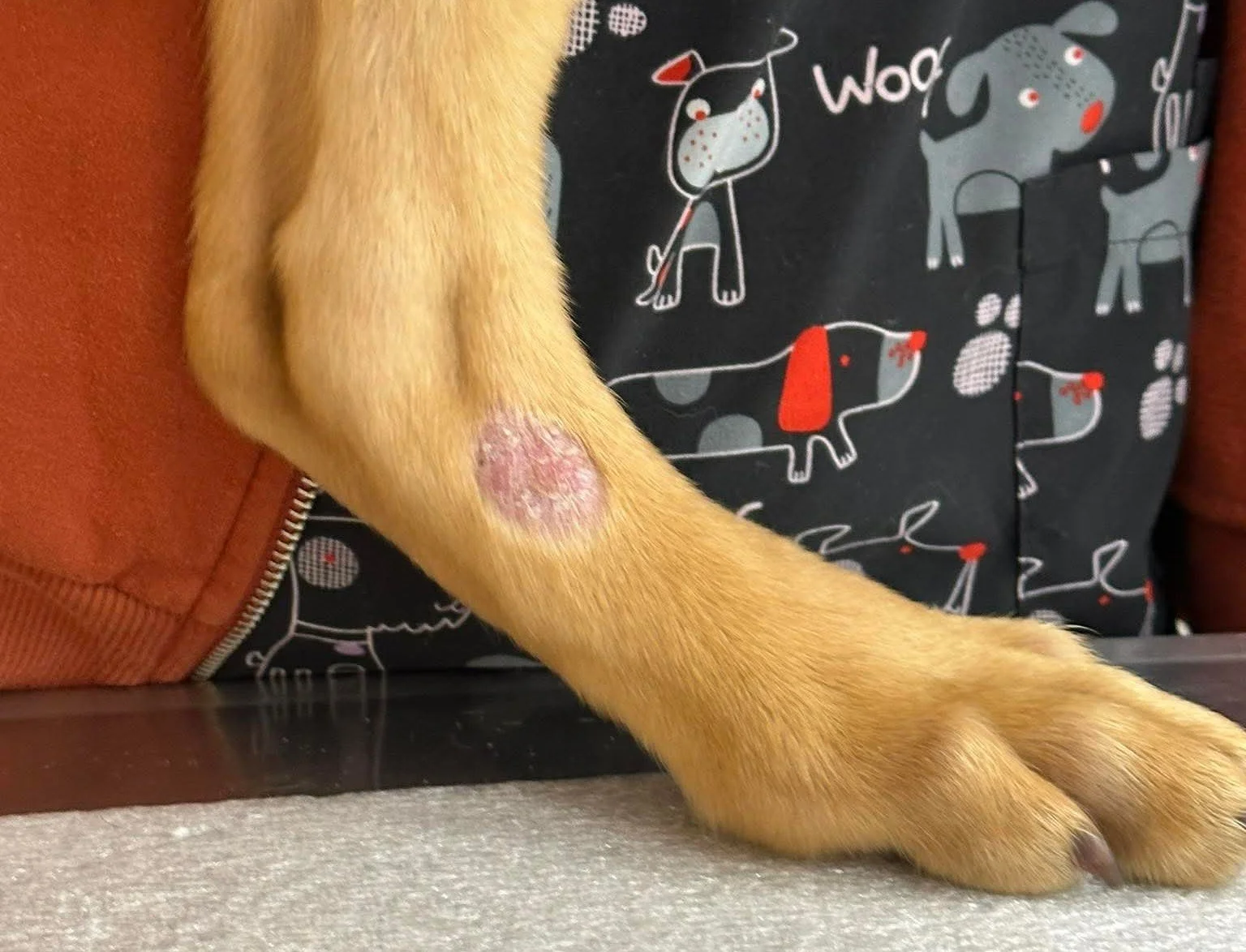
-
Ringworm can be contracted from touching an infected animal or coming into contact with fungal spores left behind on fur or hair. The spores can live in the environment for EIGHTEEN months!
-
Symptoms in humans include a round, red, often scaly spot on the skin that can be easily mistaken for eczema. This spot is sometimes itchy.
For animals, fur loss can be circular or irregular and is most commonly seen on the paws, ears, around the eyes or on the muzzle. Skin can be flaky and infected hair follicles often glow under black light.
-
Official diagnosis of Ringworm can be done at a veterinary office via a “skin scrape.” This is where flakes of skin are tested for fungal spores.
Treatment includes medicated baths twice weekly and topical anti-fungals daily. One of the most important parts of treatment is routine cleaning and disinfecting to prevent reinfection.
In severe cases, oral anti-fungals can be prescribed by a veterinarian.
-
Animals with suspected ringworm should be quarantined from other animals during their contagious period. (A MINIMUM of three weeks after beginning treatment.)
Animals should be kept in an easily sanitized such as a bathroom or laundry room. Anything that cannot be thoroughly cleaned should be disposed of.
Items that should be cleaned daily:
Litter boxes scooped, and litter scoops washed.
Cages and enclosures vacuumed for loose hairs and wiped down with appropriate cleaners.
Replace bedding
Sweep, vacuum, and mop floors
Wash and replace food and water bowls
Disinfect soft surfaces with disinfectant spray.
Appropriate Cleaners:
Heat over 110 degrees (f)
Diluted bleach 1:10
Clorox Clean-Up
Formula 409
RESCUE